Wednesday, November 29, 2006

GEKU, NAIKU AND A STREET CALLED OHARAIMACHI

The most sacred Shinto shrines in Japan are 90 minutes away by train from Nagoya in Ise. I decided to go there during my first weekend in Nagoya, still jittery from my subway uncertainties. Ogino-san has the kindness of showing me the way to the station of the train to Ise, providing me English maps, and writing down queries for direction in Japanese in case I get lost. So the next day which is a Saturday, I took the subway to the Kintetsu Line at Nagoya’s Central Station. I am sure I was at the right place but it is not the same one Ogino-san took me. And so I spent 1 hour trying to figure out how to get a ticket to Ise because the ticket vending machines don’t seem to understand what I want it to do. I almost decided to turn back before taking a leap of faith by asking a station staff for direction. After a few minutes of broken Japanese, broken English, and lots of gestures, I was on my way to Ise.

There was one train transfer at the Matsusaka Station before I arrived at the Iseshi Station. There, I asked my way to the shrines. The Ise Shrines are actually 2 separate shrines: the Outer Shrine or Geku and the Inner Shrine or Naiku. Geku, a 5-minute walk from the train station, was my first destination. It is believed to have been established in the 5th century and dedicated to Toyouke --- the kami of clothing, food, and housing. It was unusually colder inside Geku and I felt eerie, as if I was transported to another world and the ancient huge trees are heavenly sentinels watching my every move. I moved with the mass of people, hoping from one minor shrine to another, giving an offering of Y1, Y10, and Y50 coins --- whispering my apologies that I am just a trainee from a poor country --- and saying my prayers in what I thought was the Shinto way. That is, holding my palms together in the usual prayer mode while repeatedly bowing my head then clapping loudly at the end.


Shinto shrines have 7 components: (1) the torii which is the approach to the shrine with a pair of koamino (i.e. guardian dogs or lions) at both sides; (2) the purification through where hands and mouth are cleaned before approaching the main hall; (3) the main and offering hall which is the most sacred place in the shrine; (4) usually a stage for bugako dances and no theaters; (5) the ema where wishes are written; (6) a place for omikuji or fortune papers; and (7) the shimenawa which mark the boundary of sacred places. By tradition, the Ise Shrines are rebuilt every 20 years which is the reason for the vacant lot beside each main shrine.

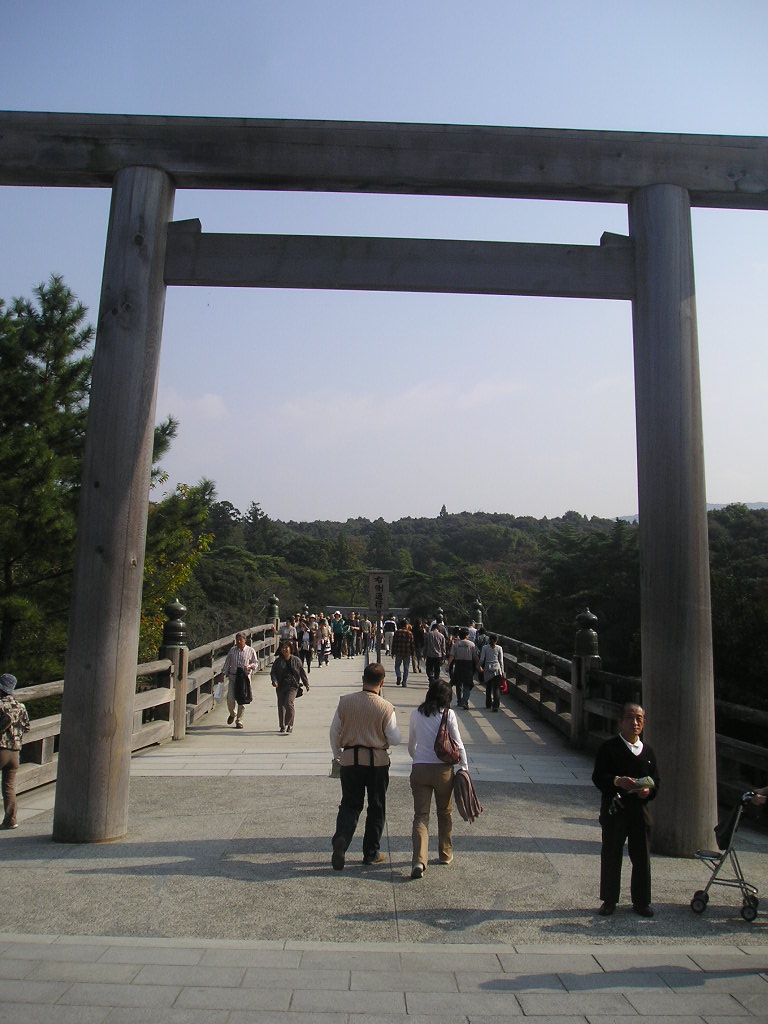
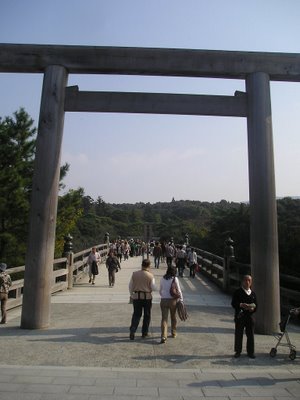
The Inner Shrine or Naiku is a 15-minute bus ride from Geku. There was a traffic jam midway the trip so I decided to follow some passengers and walked the rest of the way. The entrance to Naiku is a dramatic wooden bridge after the torii. It looks pretty much like Geku except that the eerie feeling is more subdued perhaps because of the multitude of people who crowded the shrine. Naiku is dedicated to Amaterasu and is believed to have been established earlier than Geku in the 3rd century. It is where the sacred mirror is stored. Taking photos of the main shrine is prohibited but I somehow managed to have one.


Outside the inner shrine is Oharaimachi --- the 1-kilometer old approach to Naiku. Today, it looks more like a shopping district but has retained its rustic elegance because of the reconstruction of houses from the Meiji era that used to line the road. Ogino-san told me later that I was very fortunate because my visit to Ise coincided with a festival where representatives of other Shinto shrines around Japan come together once in several years. There was a parade, which is similar to the Philippine prusisyon, where wooden altar-like structures are carried by men in frenzy, which are like our karosa. That is when I understood the traffic jam and the throng of people who were there that day. I had my first taste of sake at Oharaimachi where I also brought a wooden toy for my youngest son Balong. I left Ise via the Ujiyamada Station feeling tired but light. I slept the rest of the way to Nagoya and slept more in the subway ride to the Issha Station.


PHOTOS (top to bottom):
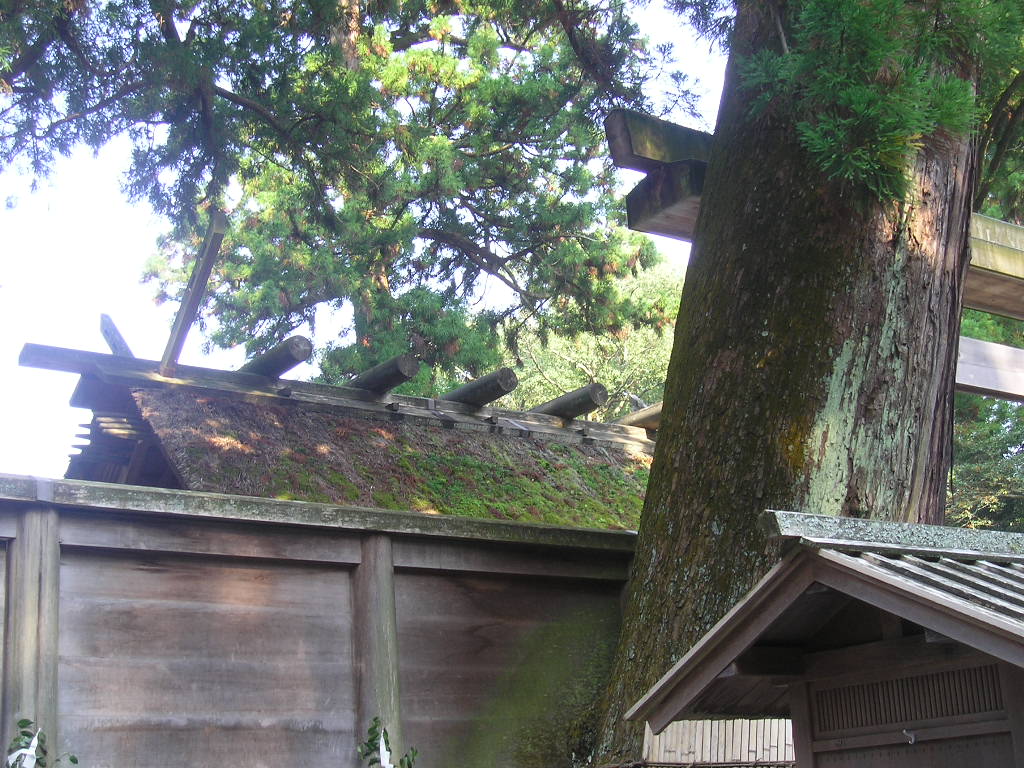
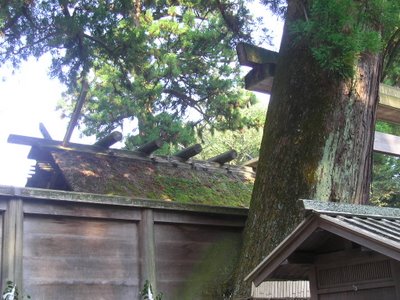
1) Mossy roof and ancient trees at the Geku main hall.
2) A shimenawa at Geku.
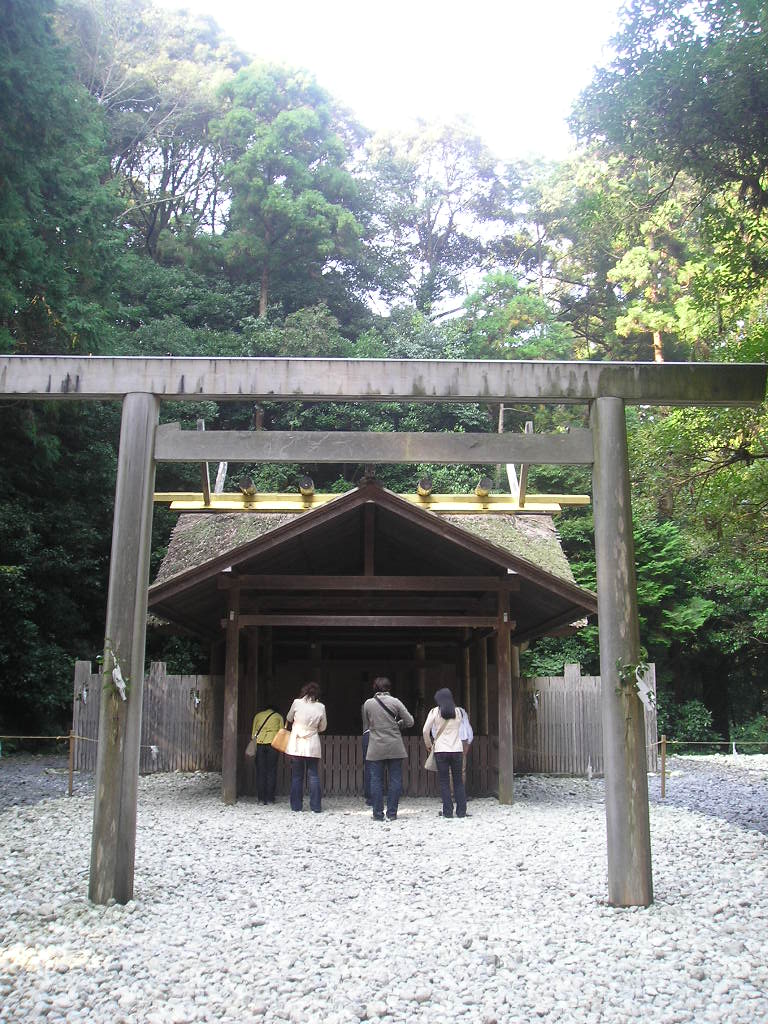
3) Worshippers in one of Geku’s minor altars.
4) The main torii and at the entrance of the wooden bridge to Naiku.
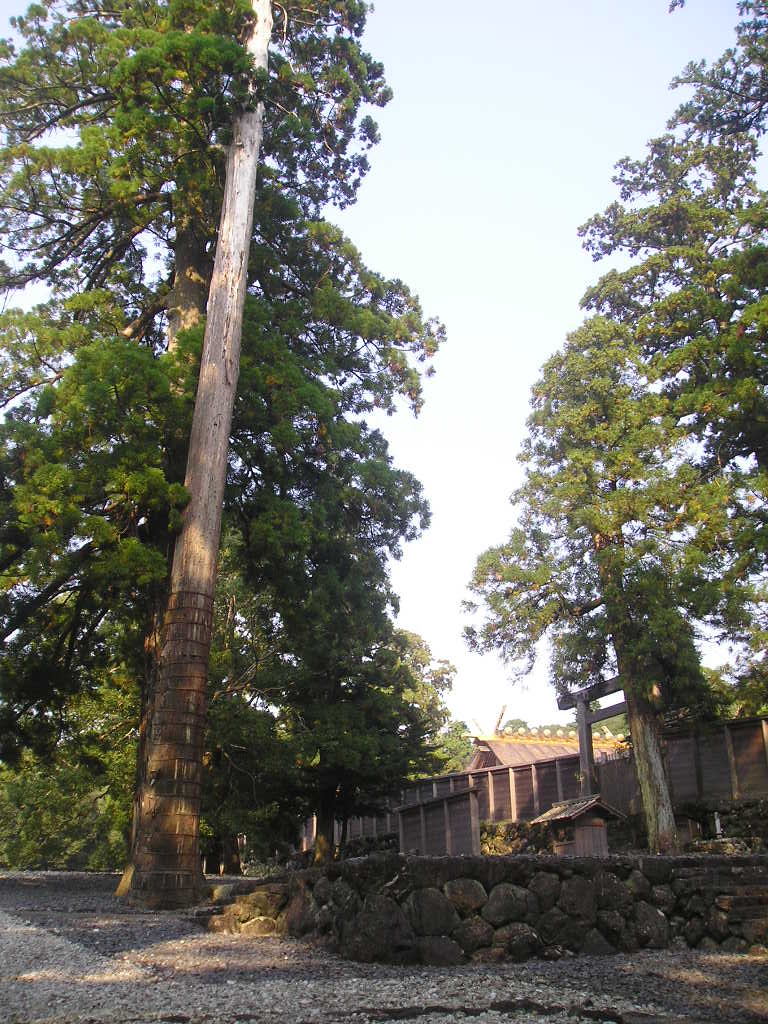
5) The vacant lot beside Naiku’s main hall where a new shrine will be built after a cycle of 20 years.
6) Worshippers pray and give their offerings at the curtain-draped window fronting Naiku’s sacred shrine.
7) Naiku’s sacred shrine is inside this enclosure.
8) Oharaimachi’s prusisyon.


Tuesday, November 28, 2006

THE NAGOYA SUBWAY CHRONICLES

I arrived in Nagoya from Osaka on 25 November 2006 after a 4-hour trip by chartered bus for a 6-week JICA-sponsored training. Although it is currently Japan’s fourth largest city, Nagoya started small as the Tokugawa family’s castle town of Owari. The family patriarch is Ieyasu Tokugawa who was appointed by the emperor as shogun in 1603. He established the seat of his government in Edo (i.e. present day Tokyo) where the Tokugawa Shogunate ruled Japan for 250 years until the Meiji Restoration in 1868 (i.e. the period when the power of the emperor was restored). One of the shogunate’s surviving legacies is the Nagoya Castle that was built at the beginning of the Edo Period between 1688 and 1703. The castle was destroyed in 1945 during the war and was reconstructed beginning in 1959.


The most convenient way to travel around Nagoya is by chikatetsu or subway of which it has 4 main lines: the yellow-coded Higashiyama Line, the red-coded Sakura-dori Line, the blue-coded Tsuramai Line, and the violet-coded Meijo Line. I watched Bill Murray in “Lost in Transition” and I though it would be difficult to go around the city with my very limited Japanese. Contrary to my early uncertainty, I found the subway easy and efficient because the signage, announcements, and maps are both in Japanese and English. Just remember the station numbers and follow the color codes and arrows. I brought a Y5,000 Yurika Card (i.e. a discounted pass card) that I used in commuting to and from the JICA Chubu International Center to the UNCRD office via the Higashiyama and Sakura-dori Lines. On weekends, I usually buy a Y600 1-day pass to go around the city, which is cheap because the minimum fare at the Higashiyama Line is Y200 yen for one trip.

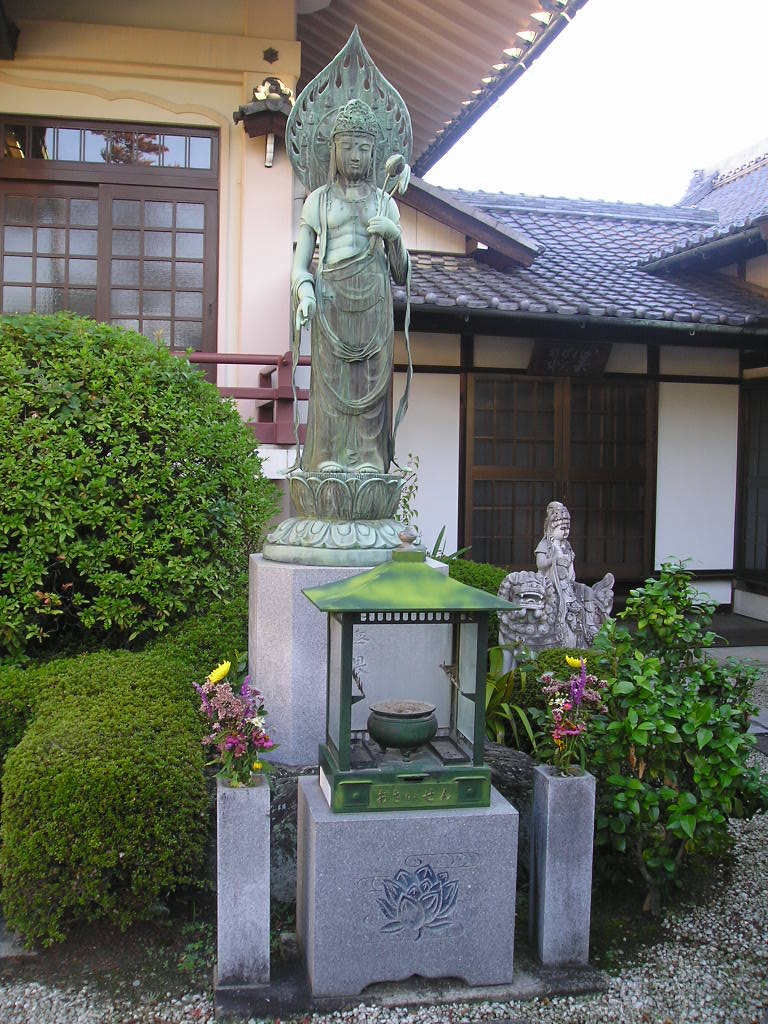
I woke up early on my first morning to hunt for temples and shrines that dotted the city and found my first one in the Jinzu Temple and the Kifune Shrine after a 15-minute walk from the JICA Center where I was staying. Now, this gets a little complicated because a temple is usually associated with Buddhism and a shrine with Shinto. Both are Japanese religions: the first one is an import from India via China and Korea, and the second one the indigenous religion which is said to be as old as Japan. Both beliefs overlap and complement each other which illustrate the openness of present day Japan to all religions. In fact, Christmas is as Christmas in Japan as in the Philippines, and many young Japanese get married in Christian churches although they are Buddhists and Shintoists.


1. Atsuta Shrine and Osu Kannon Temple

Atsuta Shrine is the second most important Shinto shrine in Japan. It is where the Sun Goddess Amaterasu who is Shinto’s most important kami or god is enshrined, and where the sacred sword --- one of the emperor’s 3 symbols of legitimacy --- is stored. The sword was said to be discovered by Susanoo, Amaterasu’s brother, in the tail of an 8-headed dragon that he killed. Another symbol is a mirror that was used to lure Amaterasu out of a cave that is now stored at Ise’s Inner Shrine. The third object is a sacred jewel that, along with the sacred sword and the mirror, was given to Ningi no Mikoto by his grandmother Amaterasu when he went down to earth. He then gave these to his grandson Jimmu who became the first emperor of Japan. The sacred jewel is now stored at Tokyo’s Imperial Palace. These 3 imperial regalia are Shinto’s most sacred objects.


I visited Atsuta Shrine via the Higashiyama Line’s Issha Station. I transferred to the Meijo Line at the Motoyama Station (No. 16 for Higashiyama and No. 17 for Meijo) and got off at its Jingu Nishi Station (No. 27). A short distance from the shrine is the Osu Kannon Temple. To get there, I took the subway at the Jingu Nishi Station then transferred to the Tsurumai Line at the Kamimaezu Station (No. 3 for Meijo and No. 7 for Tsurumai). The next stop will be Osu Kannon Station (No. 8).

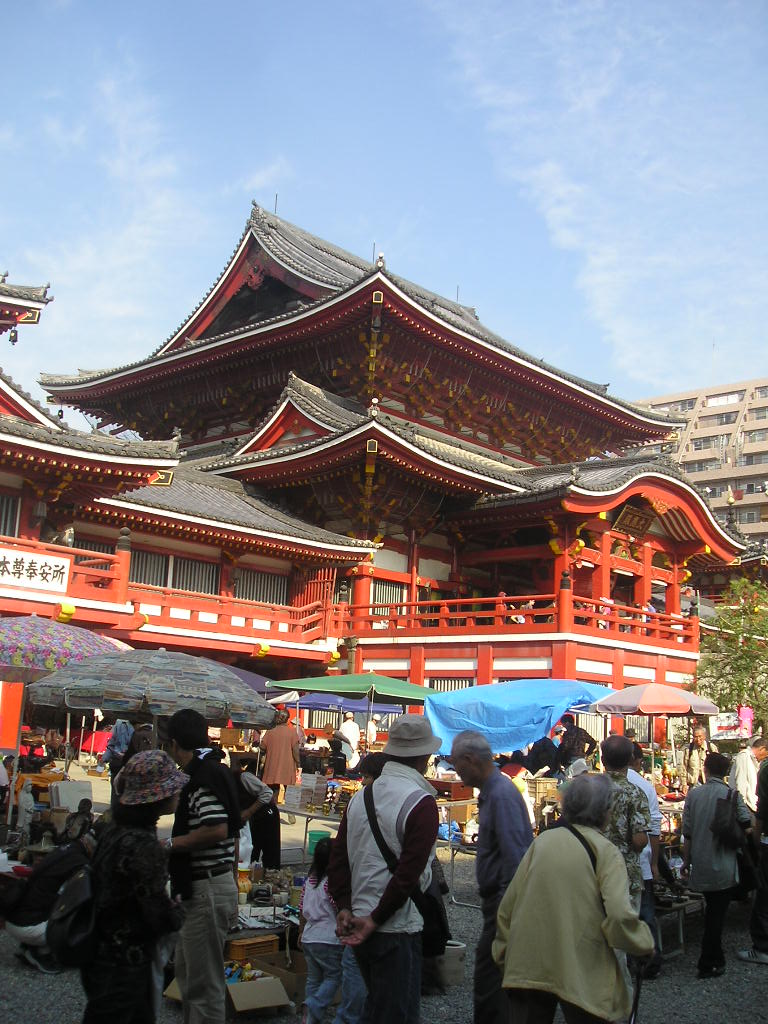
The Osu Kannon Temple was originally located in Gifu Prefecture. It was founded by Noushin Shounin who built the temple in 1324 as ordered by Emperor Godaigo. Ieyasu Tokugawa moved the temple to its present site in 1612. My 2 visits to the temple fortunately coincided with its famous flea market that is held every 8th and 28th of each month. I was able to haggle for a souvenir samurai sword at half its tagged price during the first visit. The present structure is a 20th century reconstruction of the previous ones but its original design remained mostly intact.


Osu Kannon is a Buddhist temple. Buddhism, or its Mahayana or “Greater Vehicle” branch to be exact, was introduced to Japan by the Korean kingdom of Kudara or Paikche in the 6th century. Since then, it has evolved into the following major sects: the Chinese sects of Tendai that was introduced by Saicho in 805, Singon that was introduced by Kukai in 806, and Zen that was introduced in 1191; Jodo or “Pure Land” that was founded in 1175 by Honen; Jodo-Shinshu or “True Pure Land” that was established by Shinran --- Honen’s successor --- in 1224; and Lotus Hokke or Nichiren that was founded in 1253 by Nichiren.

2. Nunoike Cathedral and the Cultural Path Futaba Museum

Oyet told me of Nagoya’s 100 year old Chikaramachi Church and on my last free day, I went hunting for it. I asked Ogino-san, our training coordinator, for directions and he told me that I might be referring to the Nunoike Cathedral which is the most well-known catholic church in Nagoya. And so I took the subway at Issha Station and alighted at the Shinsakae-machi Station (No. 11). I thought I could find the cathedral easily through its spires but it took me 30 minutes of walking and asking around before finally doing so. There it is, tucked in a quite corner, its spires dwarfed by modern skyscrapers. It looked pretty much like the San Sebastian Church in Manila. The church was built in 1962 and serves as the cathedral of the Diocese of Nagoya that has jurisdiction over parishes in the prefectures of Aichi, Gifu, Ishikawa, Toyama, and Fukui.


I asked about the Chikaramachi Church and was given easy directions: walk straight ahead to the expressway, turn right, then the church 2 blocks away somewhere. It was another 20 minute walk but well worth it. The church was built by Shusai Inoue in 1904 and has remained intact including its convento that was built in 1930. He, along with Father Turtan, evangelized in the Aichi-Gifu region. The church is located in a historic district that used to be the towns of Shirakabe, Chikara, and Shumoko where vassals of the Tokugawa Shogunate resided including Asahi Bunzaemon, author of the Ohm Rochuki. Traders and upper class families later built their homes in the area after the Meiji Restoration among which are Sasuke Toyoda (younger brother of Sakischi Toyoda, Japan’s acknowledged “King of Inventors”), Tesujiro Haruta (founder of Taiyo Shoko Company, Ltd.), and Sadayakko Kawakami (considered as Japan’s first actress and popularly known as Madame Sadayakko). In 1985, the area was designated as a protected historical site by the Nagoya City government and was collectively called as the Cultural Path Futaba Museum.


3. Sundays in Nanzan

I go to the Nanza Church’s English mass every Sunday morning that I can with Nolan and Madz --- fellow Filipino JICA trainees --- where I met other Filipino expatriates who are either working or studying in Japan. One is a Ph. D. student from PHILRICE which is just 2 kilometers away from my home in Bacal 2, and who is the inaanak sa kasal of a former colleague who is now with PHILRICE who was also in Japan at that time. We usually go by bike but the church can be reached via the Higashiyama Line through the Motoyama Station. On my last mass there, we took photos of the changing colors of Nagoya University. It is autumn in Japan and the best season of the year when the momiji (maple) leaves change colors before the winter season. It was a very beautiful sight.


Postscript

The subways are located underground. One thing I observed was the passengers usually have something to read either seated or standing then doze off to sleep (or just closed their eyes). A Japanese professor told me that his people worked like machines. Perhaps the subway is a moment of respite for them. Or maybe it’s the darkness of the tunnels.

I saw many interesting characters in the subway. My most unforgettable ones are the young women who dressed up like Barbie Dolls and anime characters, and the young men who tried to look like rock stars with their Duran Duran hairdos and ragged jeans. Boots are usual accessories for women maybe because of the chill. The younger ones seem to prefer mini skirts (some are really micro) and short walking shorts. Most men are in their coat and ties. The Japanese dress differently and may look serious but will politely try to help a lost stranger find his/her way.

On the last 2 weeks of my training, I walked from the UNCRD to the Nagoya Central Station along the underground department stores to avoid the hassle of transferring from the Sakura-dori to the Higashiyama Lines. Once in the train, I will drift into a light sleep, automatically waking when the train stops at the Issha Station.

PHOTOS (top to bottom):
1) The Nagoya Castle.
2) Jinzu Temple.
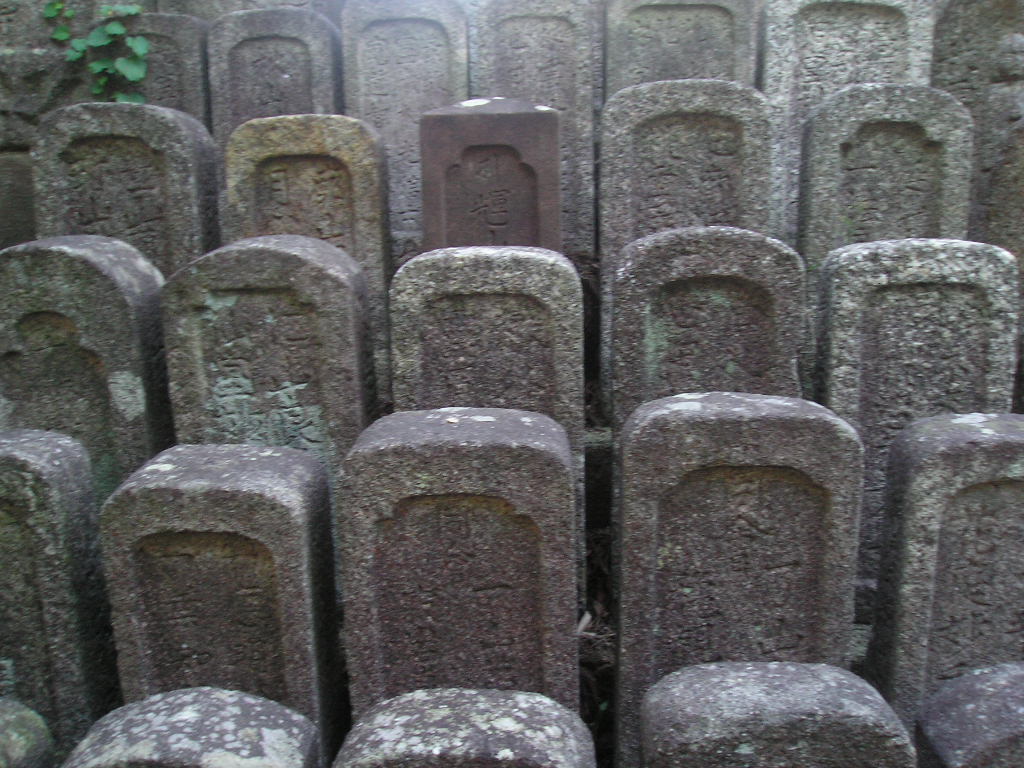
3) Tombstones in the Kifune Shrine.
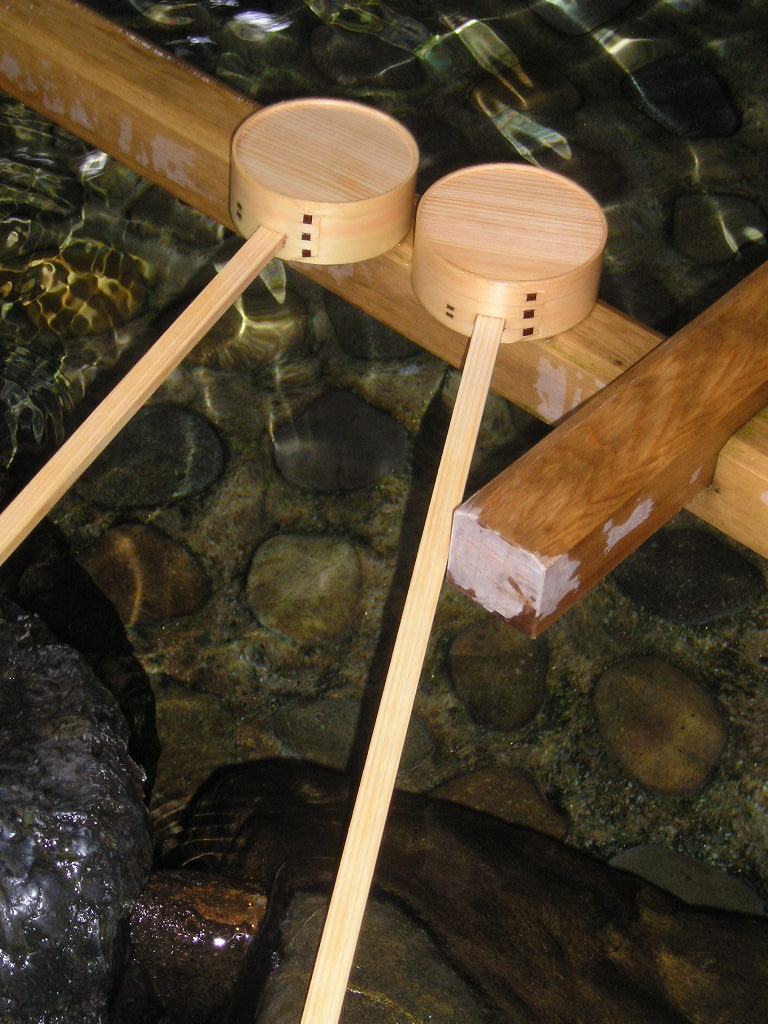
4) Atsuta Shrine’s purification through.
5) A Shinto priest officiating to what is equivalent to the Filipino simba at the Atsuta Shrine’s
main hall.
6) Flea market at the Osu Kannon Temple.
7) Nagoya’s Nunoike Cathedral.
8) The 102 years old Chikaramachi Church.
9) Entrance to Chikaramachi’s convento that was built in 1930.
10) Sasuke Toyoda’s former residence.
11) Tesujiro Haruta’s house.
12) The Sadayakko Kawakami museum.
13) The SVD-administered Nanza Church near Nagoya University.
14) Momiji leaves.

Sunday, November 19, 2006

QUIAPO'S GIFT

What is now the Basilica Minor de Nuestro Padre Jesus Nazareno was first established by 1574 as the Franciscan ecclesiastical mission of Quiapo. Its first makeshift church of light materials was later burned by Limahong’s raiders. In 1586, Governor-General Santiago de Vera established Quiapo as a district of Manila and by 1588, Fr. Antonio de Nombella (OFM) probably had another church built. This was razed by fire in 1603, probably rebuilt, and burned down again in 1639. A new church was again built in 1686 that British invaders unsuccessfully tried to raze in 1762. This same building was seriously damaged during the earthquake of 1863. Fr. Eusebio de Leon (OFM) then later Fr. Manuel Roxas Manio (OFM) reconstructed the church from 1879 until 1889. This was again razed by fire in 1929 and was reconstructed in 1933 under the supervision of Fr. Magdaleno Castillo with the assistance of Arch. Juan F. Nakpil. The church was enlarged and improved in 1984. The image of the Nuestro Padre Jesus Nazareno or the Black Nazarene is enshrined in the church and venerated by thousands of devotees.

During the G20 conference in Islamabad, Pakistan on September 8-12 last year, I was one of those sent by the Rice Watch and Action Network to attend a parallel forum of civil society organizations in its behalf. We have 8 days to prepare our travel documents and while doing so, we found out that we need around 15 days to secure an entry visa from the Pakistani embassy. This will cover the issuance of an NBI clearance that is a prerequisite for the issuance of a document from Malacanang’s authentication office that is required for the issuance of another DFA-authenticated document that must be submitted for the issuance of a Pakistani visa that requires 8 working days to process from application to release. I was ready to give up. On the way back to our Manila office, I asked Elias to drop by the Quiapo church to shoot some photos. A mass is being celebrated and people clogged the entrance so I decided to while my time at Plaza Miranda right in the church’s front yard. There, vendors are lined up offering blessings from heaven by buying and lighting their candles. I saw a bunch that said it is for travel requests. I am an agnostic at best but I thought I’ll give it a shot so I brought one, lighted it up, and silently asked God to help me go to Pakistan.

The next day, I was able to get an NBI clearance in an hour (which usually takes half a day) through the intercession of a friend. At the Malacanang authentication office, I went to the information booth and showed a nice lady my invitation to the G20 conference. She realized the urgency and promptly issued me the document I need (which would have taken 3 days). The next day, I went to the DFA and waited for almost a day just to submit my request. I did but was told that it will require 3 days of processing. “This is it,” I said to myself and prepared to go home. “Hoy, ano ginagawa mo dito!” It turned out that the young lady who received my application is the sister of a former colleague from San Jose City. I told her my problem and she promptly called her boss. I went to the Pakistani embassy that day with the document tucked safely in my bag and a growing optimism that perhaps I can really make it. But this was dashed by a masungit Filipino embassy staff who bluntly told us that they don’t accept applications on Fridays and that we were too late since visa issuance require around 8 working days and we are supposed to leave next week. Just the same we convinced him to at least accept our passports and applications. After that, Hazel made a phone call to a former government official who made a phone call to the embassy. That is how we got to got to Islamabad.

Islamabad is 2 hours away by plane from Karachi. It is a new city having been established in the 1960s in the hinterlands of Punjab province’s Pothohar Plateau near the Margalla Hills. The new capital site was selected to “reflect the cultures, traditions, hopes, aspirations and dreams of all diverse ethnic, linguistic and regional groups that constitute the Pakistani nation… isolate it from the onslaught of business and commercial interests… and located close to Muslim areas of Central Asia and in proximity with the fraternal people of Iran, Afghanistan, Saudi Arabia and Turkey”. It is a well-planned and modern city as envisioned by the Greek firm Doxiadis Associates who was contracted to draw up the master plan.

The venue of our conference is actually 1 hour away by car from Islamabad at the foothills of the mighty Himalayas in a mountain resort called Muhree Hills. I think it is one of the most beautiful places I’ve ever been. After the conference, we spent 2 days and a night in Islamabad. It was a weekend and there were very few people around except in the shopping districts where tourists go. I convinced Hazel to go on a quick half day tour and hired a taxi. One of the places we’ve visited is the Shah Faisal Mosque near the Islamic University. It was constructed with the assistance of Saudi Arabia’s King Faisal and took 12 years to build --- from 1976 until 1988 --- based on the design of a leading Turkish architect. It is one, if not the biggest, mosque in the world and can accommodate 24,000 worshippers plus another 40,000 in its courtyard. Its 4 minarets are 88 meters high each.


Back in the Philippines, I made another visit to the Quiapo church to give my thanks. I lighted another bunch of candles this time for the health and wellbeing of my family. I came as a doubter. Now perhaps, I am a believer.