Saturday, September 16, 2006

WALKING INTRAMUROS

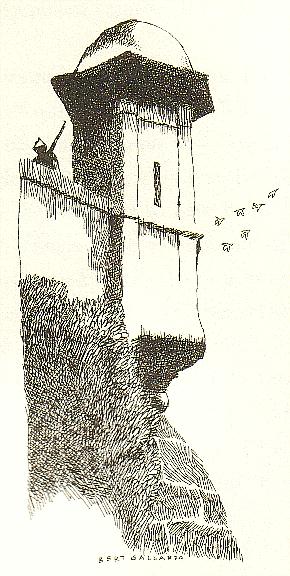
What will be Intramuros was built over Rajah Soliman’s fort at the tip of an island called Maynila along the Pasig River delta. Don Miguel Lopez de Legazpi formally founded the City of Manila on that place as the capital of the New Kingdom of Castile in the name of his Spanish king on 19 May 1571 on the feast day of Sta. Potenciana. The first Spanish structure to be built is what is now Fort Santiago. Outside the fort is around 150 bahay kubos comprising the new city’s roughly 250 residents.


The transformation of Manila as a Walled City or Intramuros was started in 1584 by Santiago de Vera, the New Kingdom of Castile’s first governor and military commander, who replaced the wooden palisades of Fort Santiago with stones. Governor Gomez Perez Dasmarinas started building the city walls through Chinese labor in 1590 that was completed in record time in 1594 during the incumbency of his son --- Governor Luis Perez Dasmarinas. The walled city has seven gates: Santa Lucia, Postigo and Banderas that opened to Manila Bay; Almacenes and Santiago that opened to the Pasig River; and Real and Parian that opened to the Extramuros (i.e. settlements outside the walls).

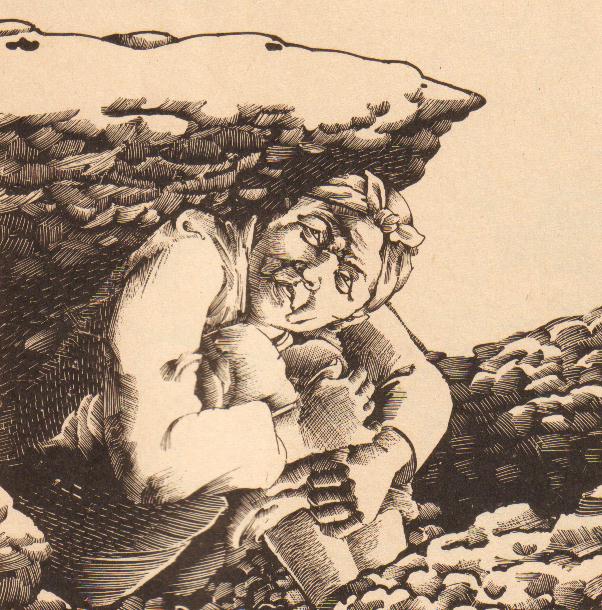
Seven magnificent churches were built by Spanish missionaries in Intramuros. But during the battle for the liberation of Manila, American forces laid siege to the Walled City for two weeks, bombarding it continuously from the other side of Pasig River. Inside the walls, the Japanese planted incendiary bombs that ignited fires. Intramuros shuddered and in the war’s aftermath, only the San Agustin Church was left standing.

After the war, most of Intramuros’ residents abandoned the Walled City’s charred shell. It became a teeming squatter’s colony that included the family of Mama Ched who migrated from Burauen, Leyte. They eventually resettled in nearby Santa Ana after Manila Mayor Antonio “Yeba” Villegas evicted the squatters in 1963. There, Mama Ched met and married her neighbor Lilop. They have 2 children: Kuya Jojo and Kuya Jerry.
I must admit that I was able to finally see Intramuros only last year, 09 March 2005 to be exact. And it took the churchopile itch to finally take me there. My first place to visit was of course San Agustin Church (discussed in a previous posting) --- arguably the oldest extant stone church in the Philippines and one of its four colonial baroque churches inscribed in the World Heritage List. I never have enough of the church’s rich collection of church and Augustinian antiques, its huge religious paintings, the haunting air of Fr. Manuel Blanco’s garden, and its well-preserved interior that seem to tease me by unfolding its secrets one at a time in every visit, as if ensuring my return. And I did come back many times.

The best way to enjoy Intramuros is through a walking tour. I did mine from the Bayview Hotel along Roxas Boulevard where I was attending a conference, going around the Luneta where I accidentally “discovered” Dr. Jose Rizal’s actual execution site (I thought it was where his monument now stands) and that of the GomBurZa martyrs. That day, I walked around Intramuros twice. The first one was on the walls starting at the Baluerte de San Diego until the Baluerte de San Gabriel where the walls end (or disappeared) along the Puerta de Isabel II, then continuing again at Fort Santiago’s Baluerte de Sta. Barbara before finally ending at the point of origin in Baluerte de San Diego. After the walls, I went for my second walk as a personal tribute to the lost churches of Intramuros that culminated in the San Agustin Church.

THE JESUITS’ SAN IGNACIO CHURCH: First built as the Sta. Ana Church in 1587, destroyed by earthquake and rebuilt as the San Ignacio Church in 1632, again destroyed by earthquake in 1852 and rebuilt in 1888 before finally being burned down by the Japanese in 1945. What was the Jesuit compound is now the site of the Pamantasan ng Lungsod ng Maynila after the congregation moved to Loyola Heights, Quezon City.


THE CAPUCHIN’S LOURDES CHURCH: The latest church to be built in Intramuros that was inaugurated in 1898 and destroyed during Word War II. The new church was moved and built along Kanlaon Street in Quezon City and the El Amanecer Building now stands on the Intramuros site.


THE RECOLLECT’S SAN NICOLAS TOLENTINO CHURCH: First built in 1608 and demolished in 1642 by order of the Spanish Governor-General; rebuilt and damaged in the 1645 earthquake, the British occupation, and finally destroyed in the 1863 earthquake; rebuilt in 1881 and again destroyed by artillery fire during World War II. The Bulletin Publication Corp. building now occupies the site.


THE FRANCISCAN’S SAN FRANCISCO CHURCH: First built in 1602 and damaged in the 1645 earthquake; rebuilt from 1739 until 1750 and destroyed during World War II. Right next to the church and also destroyed in the war is the Chapel of the Venerable Orden Tercera that was first built in 1618. The site is now occupied by the Mapua Institute of Technology.


THE DOMINICANS’ STO. DOMINGO CHURCH: First built in 1588 and rebuilt 4 times until 1868 before being destroyed by Japanese bombs in 1941. The church was relocated and rebuilt in 1954 along Quezon Avenue in Quezon City. A branch of the Bank of the Philippine Islands now stands in its old site.


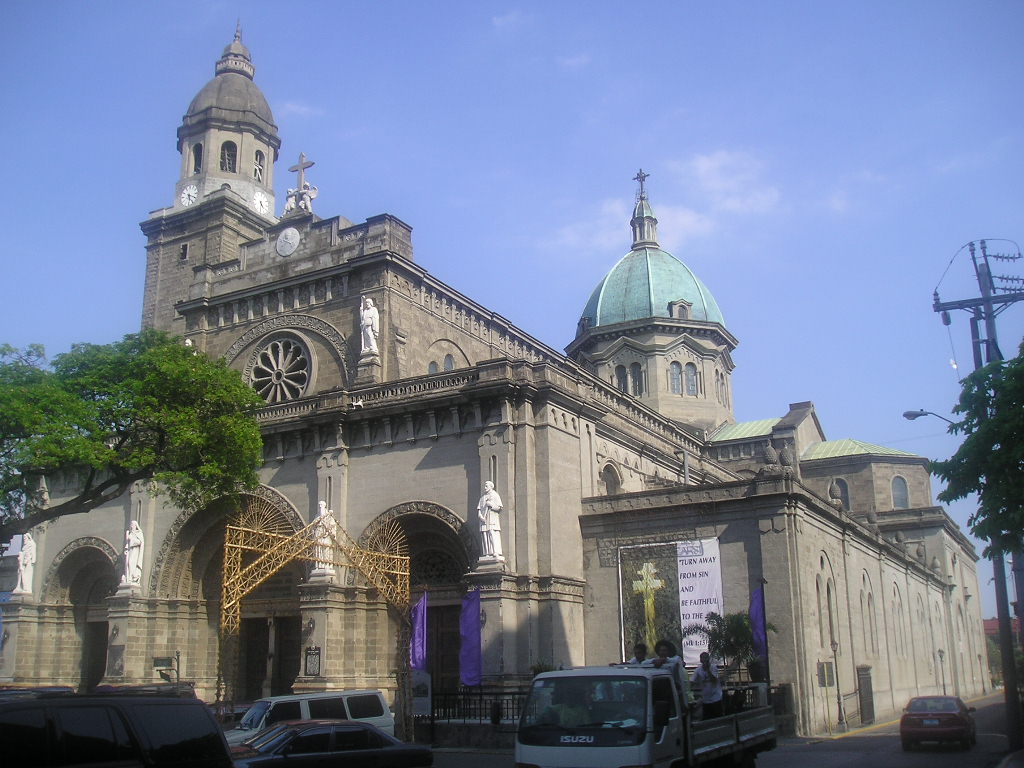
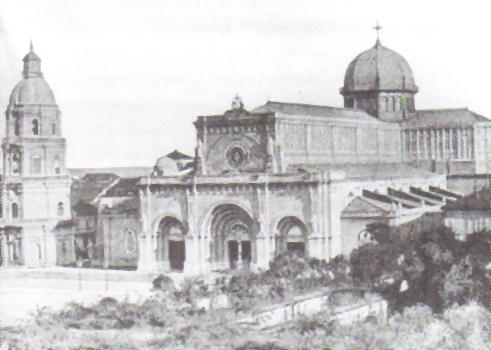
After San Agustin Church, I walked my way along the cobbled General Luna Street towards the Cathedral Basilica of La Imaculada Concepcion, more popularly known as the Manila Metropolitan Cathedral. The grand structure started as a church of light materials built by Fr. Juan de Vivero (OP) in 1571. This was replaced by another structure that Fr. Domingo de Salazar probably built in 1581 that was afterwards declared as a cathedral. This was damaged by a typhoon in 1582, was repaired, only to be razed by a fire in 1583. A stone structure was started to be built in 1592 but was destroyed during the earthquake of 1600 before it was finished. Over this, another cathedral was built in 1614 that was again destroyed during an earthquake in 1645. This was again replaced by a magnificent cathedral that Archbishop Miguel Poblete had built from 1653 until 1671. Again, this was destroyed in the earthquake of 1863 and another cathedral was built over its ruins under the supervisions of Architects Luciano Oliver and Vicente Serrano Salaverria, and Engineers Eduardo Lopez Navarro and Manuel Ramirez Bazan from 1871 until 1878. This was again damaged during the 1880 earthquake then finally destroyed during the Battle of Manila in 1945. It was rebuilt under the supervision of Archbishop Rufino Santos and Architect Fernando Ocampo from 1954 until 1958.


Almaguer's War

Amang Lakay was the teniente del barrio of Almaguer when the Japanese came and established their garrison at the school grounds. He sold them vegetables from his bangcag like pechay, radish and eggplant that the Japanese would slice, dip in soy sauce, and eat raw. He was paid with bundles of worthless yapyap or Japanese-printed “Mickey Mouse” money. At nights however, Amang Lakay feed Filipino guerillas with Inang Baket’s delicious inalseman dishes of freshwater fish caught by Amang Lakay’s tabucol in the dacquel nga carayan. He also collected donations of rice and would occasionally slaughter a cow for the guerillas that will be transported through patukis, covered with banana stalks then piled with rice seedlings for disguise, and delivered to the guerillas across the dacquel nga carayan by Uncles Roque and Itong, the sons of Jacinto and Jose.


My mother and Auntie Ibang are constant companions during the war. As a child, mother is dark skinned and will only wear clothes if scared by neighbors with Apo Pugot. One day, she slipped from Auntie Ibang’s hold and fell into a makeshift stove that was dug out of the soil. The hot coals burned a scar on her arm that will be with her for the rest of her life. She and Auntie Ibang tended Amany Lakay’s carabaos and will frequently meet patrolling Japanese soldiers. In moments like this, mother would always snap to attention and sing the Japanese national anthem to the amusement of the soldiers.

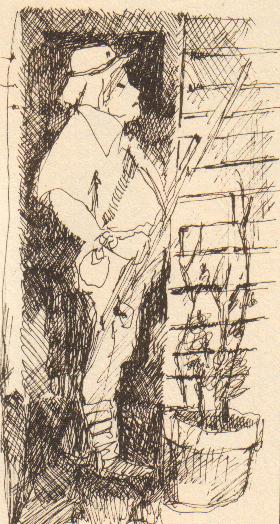
In the last days of the war however, the Japanese soldiers became beastly. They beheaded Amang Lakay’s neighbor when he refused to send his daughters to the Japanese garrison. To avoid being noticed by the Japanese, the young women of Almaguer applied squash sap on their faces to make them look old. The Japanese were said to also toss babies in the air then spear them with bayonets when they fall down. The American bombardment intensified so Amang Lakay led the residents of Almaguer in building paksuls (i.e. foxholes) in the daya part --- underground trenches shaped like two connected “Ls” --- where they will evacuate and seek shelter during the bombing raids.


Liberation found Amang Lakay homeless because the retreating Japanese who converted his house into a hospital burned it down before escaping to Ifugao. He was eventually paid P300.00 in war damages. To support his family, Amang Lakay would walk to the American garrison to trade some rice and vegetables for soap and salt. On one of his bartering trips, bamboo thorns that were sprayed with kating scratched his shin. The scratches turned into gaddil that he will have to endure for the rest of his life.

After the war, Japanese corpses are strewn everywhere, fouling the air with the smell of rotting flesh before Almaguer’s citizens finally burned them. But it seemed that the ashes of the burning corpses mixed with the wind to become vengeful spirits of a plague that consumed those who survived the war. Someone is buried everyday and usually, those who attended the burial will die in the evening and be buried the next day. Its time for the Nuestra de Senora de Lourdes to be brought out of the church and bless the cursed air of Almaguer. In 1947, a great flood came sweeping away animals and houses. To the people of Almaguer, this is the Babaylan’s act of cleansing them of the war’s horrible stench.

CREDITS: Illustrations and historical materials were sourced from Nick Joaquin’s “Manila, My Manila”, pre-World War II church photos and historical materials from Jose Victor Torres’ “Ciudad Murada: A Walk Through Historic Intramuros”, World War II illustrations from Mariel Francisco and Fe Maria Arriola’s “The History of the Burgis”, and World War II Intramuros photo from Phillip Katz’s World War II on the Philippines: A Pictorial Review”.

Friday, September 15, 2006

WORLD HERITAGE SITES

According to the UNESCO World Heritage Centre website, a heritage is a legacy from the past that must be passed on to future generations. A World Heritage --- either cultural or natural --- within this context is exceptional for its universal application and belongs to the world regardless of where they are located.

The Philippines currently has 5 World Heritage Sites. Of these, 2 are natural namely the Tubbataha Reef Marine Park and the Puerto Princesa Subterranean River National Park; and 3 are cultural namely the Rice Terraces of the Philippine Cordilleras, the Historic Town of Vigan, and the Baroque Churches of the Philippines. The last site is actually composed of 4 churches: the colonial churches in Paoay (Ilocos Norte), Sta. Maria (Ilocos Sur), Intramuros (Manila), and Miag-ao (Iloilo) --- all built by the Augustinians --- that were inscribed in the UNESCO World Heritage List in 1993 because of their “unique architectural style which is a reinterpretation of European Baroque by Chinese and Philippine craftsmen”. I have the bragging right of having been to all these amazing architectural treasures.

Paoay's Church of San Agustin: A Unique Baroque

Paoay is referred to as Bombay in earlier times presumably in reference to its early settlers who were said to come from India. Its present name was derived from the Ilocano assertion “maka-paoay kami” that means they could do it alone. Paoay was established by the Augustinians as a visita in 1586. It was established as a pueblo more than 100 years later in 1701. Fr. Antonio Estavillo (OSA) initiated building the present church from 1699 to 1702. An earthquake around 1706 or 1707 damaged the church but was repaired by 1710. The convent was built in 1719 and the bell tower from 1793 until 1821. Fr. Jose Nieto (OSA) added improvements to the church from 1818 to 1836. Fr. Valentin Aparicio (OSA) initiated the restoration of the convent in 1844 and Fr. Ruperto Rodriguez (OSA) the church in 1865. Fr. Baldomero Real (OSA) --- the famous orator of San Agustin church in Manila --- initiated major restoration works from 1889 until 1898. An earthquake again damaged the church in 1927. The church provides a breathtaking view from any angle. It is noted for its unique Barouqe façade and massive buttresses flanking the outside walls.


Sta. Maria's Church of Nuestra Senora dela Asuncion: Ermita on a Hill

The visita of Sta. Maria was probably established by the Augustinians before 1660. What might be the first church and convent was burned during Malong’s Revolt of 1661. Another church, originally intended for the pueblo of Narvacan, was built in 1769 in the present site where the image of the Nuestra Senora dela Asuncion was said to appear on a guava tree after periodically disappearing from its ermita. This might have been destroyed and was rebuilt again in 1810 by Fr. Jose Cardano (OSA) who also added a bell tower. The church and the convent were razed by fire in 1822 and were rebuilt in 1824 under the supervision of Fr. Alejandro Peyrona (OSA). This might be the present church that Fr. Lorenzo Rodriguez (OSA) had restored and enclosed in a stone fence in 1863. Fr. Benigno Fenandez (OSA) initiated rebuilding the church after an earthquake damaged it in 1880. Fr. Juan Zallo continued the rebuilding work until 1889. The church is strategically situated on a hill overlooking the central town plaza that makes it unique among other churches in the Philippines.


Intramuros' Church of Conversion de San Pablo: The Philippines' Oldest Stone Church

The first Christian settlement in Manila was established in 1571. One year later, the Augustinians accepted it as a mission and a makeshift church of light materials was built. This was razed by fire during Lim Tao Kien’s (i.e. Limahon) raid of Manila in 1574. Fr. Juan de Alva (OSA) and Fr. Diego de Espinar (OSA) immediately had another church built that was again razed by an accidental fire during the funeral rites for Governor-General Gonzalo Ronquillo in 1586. Another church was built but again destroyed by fire in 1585. Finally, the Augustinians decided to build a stone church and in 1587, Fr. Francisco de Bustos (OSA) initiated the construction work. Fr. Ildefonso Perez (OSA) and Fr. Diego de Avila (OSA) supervised the church building from 1590 to 1596 until it was finished during the term of Bro. Alonso de Perea in 1607. The church’s architect is Juan Macias. The church compound was ransacked and sold in 1762 by the invading British who also desecrated the tomb of Adelantado Miguel Lopez de Legazpi and other personalities buried in the church. The church compound was expanded in 1861 and suffered damages in the 1863 earthquake. One of the towers was pulled down after sustaining heavy damage during the 1880 earthquake and its 3,400-kilogram bell --- used only to announce the arrival of Governor-Generals and to report incidences of fire --- now adorns the entrance to the convent. The church was damaged during the 1898 Philippine Revolution and again during World War II. It was the only church in Intramuros that survived the battle for the liberation of Manila from the invading Japanese. The church underwent repair and restoration works in 1969 and 1976, respectively. It is the oldest extant stone church in the Philippines. Aside from that of Legazpi, the remains of his grandsons Juan de Salcedo and Lavezares, Blessed Pedro de Zuniga, Juan Luna, and Pedro Paterno are entombed in the church. It was also the site of the following significant events: the first Church Council in 1578, the first National Synod in 1581, the origin of the Royal Seal’s procession in 1584, the first National Council of the Catholic Church convention in 1593, the origin of the Audencia Real de Filipinas’ procession during its foundation in 1598, and it was where Gen. Juan Jaudenes initially discussed the terms for the surrender of Manila to the Americans in 1898.


Miag-ao's Church of Santo Tomas de Villanueva: West and East in a Bas Relief


Miagao was probably named after a plant called miagos that grow abundantly in the area. The Augustinians accepted it as a visita of Oton in 1580. Capitan Nicolas Pangkug supervised the construction of the first church in 1731 near the Tumagbok River three years before the arrival of the first Spanish priests. Moro pirates burned this in 1741. Fr. Fernando Camporredondo (OSA) supervised the building of a new church from 1746 until 1747 that was again looted and burned by marauding pirates. Fr. Francisco Gonzales Maximo (OSA) had another church built this time on top of a hill called Tacas from 1787 to 1797 under the supervisions of a Matias from Igbaras and an Aquino from Alimodian. The structure was built to serve as a fortress against frequent pirate raids and has withstood typhoons and earthquakes. Fr. Francisco Perez (OSA) had the bell tower improved in 1839 while Fr. Agustin Escudero (OSA) initiated restoration work in 1869. The bas-relief depicting St. Christopher carrying the child Jesus amidst local coconut, papaya and guava trees were installed during the terms of Fr. Jose Laviana (OSA) and Fr. Jose Sacristan (OSA) probably around 1880. The church was razed during the Philippine Revolution of 1898 and the Filipino-American War of 1899. It was rebuilt but was again damaged by fire in 1910, repaired and damaged again by fire during the Japanese occupation. The church sustained further damager during the 1948 earthquake. Msgr. Wenceslao Enojo and Msgr. Leonardo Javillo had the church restored from 1948 and 1959. Further restoration was conducted from 1960 until 1962. The National Historical Institute later supervised a final restoration work.


Friday, September 08, 2006

DETOUR TO MARAGONDON

On our way to our company’s institutional assessment conference in the town of Silang in Cavite, I took Pare Amor and Pare Eboy for a historical trip along Cavite’s northwest Manila Bay coastline. After exiting from the Manila-Cavite Coastal Road, we went straight towards the town of Kawit instead of taking the much shorter route to Silang via the Aguinaldo Highway. This long detour will take us along the historic towns of Kawit, Noveleta, Rosario, Tanza, Naic and Maragondon before turning left to Magallanes, Aguinaldo and Alfonso where we exited to Tagaytay City and finally Silang. The detour took most of our day but we are very grateful for the experience of finally seeing with our eyes what we only read in textbooks. Of course, there are colonial churches of note along the way and I made sure that we did not miss them.


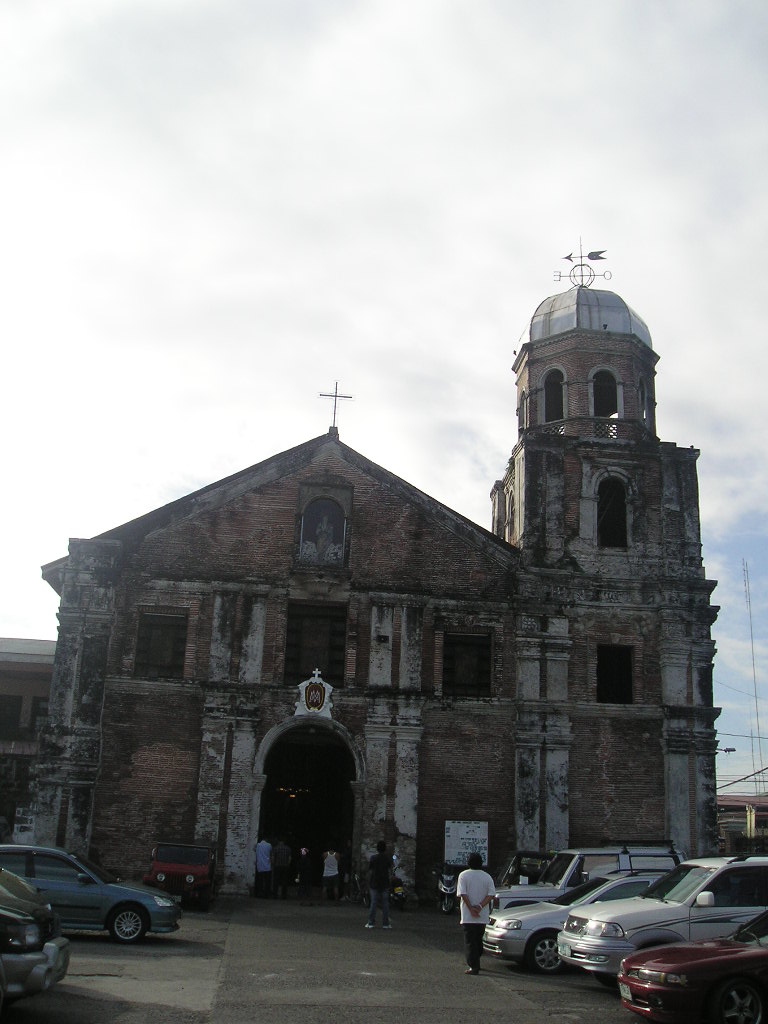
We arrived at the town of Kawit early in the morning and, unfortunately for us, found the Aguinaldo Museum closed because it was a Sunday. I’ve been there before so my kumpares have to content themselves with my stories of what can be seen inside. A commemorative plaza fronts the house where Philippine Independence was declared on 12 June 1898. Not far away is the church of Sta. Maria Magdalena that was built in 1737 and where Gen. Emilio Aguinaldo --- the first president of the Philippine Republic ---- was baptized in 1869. The mission of Kawit was first administered by the Jesuits in 1624 which they later handed to the secular clergy in 1768. A typhoon damaged the church in 1831 and was repaired before being handed to the Augustinian Recollects in 1894. The church has been extensively restored in 1990.


Kawit is the bailiwick of General Aguinaldo’s Magdalo faction and from there, we traced the events that led to one of the tragedies of the Philippine Revolution: Noveleta where in 1896 the revolution in Cavite caught fire with the assassination of the captain of the Guardia Civil and the legendary revolutionary Gen. Luciano San Miguel defeated a more superior Spanish force; Rosario, site of the 1897 Tejeros Convention that finally split the Katipunan with the election of General Aguinaldo as president and Andres Bonifacio’s refusal to recognize him; Tanza where General Aguinaldo organized his revolutionary government after the Tejeros Convention; and Naic where Bonifacio plotted against General Aguinaldo. Finally, we reached Maragondon.

National Heritage Site: A Church Built With River Stones


The Jesuits built the church of Maragondon that was dedicated to the La Asuncion de la Nuestra Senora. The mission was later handed to the Augustinian Recollects. The church is mostly made of river stones and features a distinctive horseshoe-shaped communion rail. Not far from the church is the house of Teodorico Reyes where Andres Bonifacio and his brother Procopio were tried by a military court headed by Brigadier-General Mariano Noriel. The great Bonifacio was executed on 10 May 1897 on nearby Mt. Buntis by his own countrymen and by the soldiers of the Katipunan that he founded.


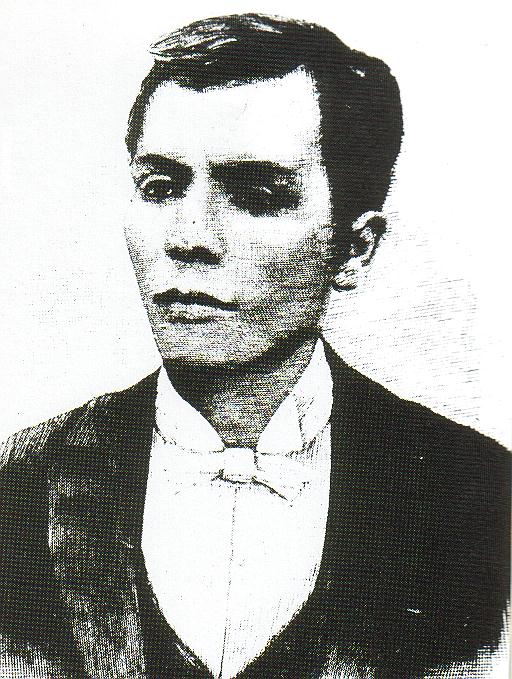
Bonifacio’s revolutionary life is tragic. He started a revolution but never won a single battle and was accused as a power grabber by imposing his leadership among the Cavitenos who were on a winning streak. Bonifacio was a Manileno in Cavite --- a province steep in Cavitismo politics. He was treacherously arrested for rebellion against General Aguinaldo’s revolutionary government during which he was seriously wounded (i.e. a stab in the neck) and his brother Ciriaco killed, brought to stand a sham trial in the course of which an officer of General Aguinaldo’s army tried to rape or raped his wife, then carried on a hammock and shot in Mt. Buntis with his brother Procopio. He was buried there, lost and forgotten, until 1918 when a government commission located and excavated his alleged remains. But even in death, Bonifacio seemed to have no peace because various quarters (including General Aguinaldo and the Veteranos de la Revolucion) contested the authenticity of the alleged Bonifacio bones that was eventually used by Manuel L. Quezon as an ammunition in his feud with General Aguinaldo. The remains were later stored in a box and displayed at the Intendencia Building with other Bonifacio relics, and were lost forever during World War II.


From Margondon, we proceeded to Tagaytay City with a brief stop-over to take photos of the Alfonso catholic church. We reached Silang before dusk. I will make early morning pilgrimages in its centuries old church for the rest of our conference.


CREDITS: Photos of the Supremo (one of his only 2 known photographs) and the alleged Bonifacio bones were borrowed from "Kasaysay: The Story of the Filipino People" while some of the historical materials were sourced from Ambeth Ocampo’s “Bones of Contention: The Bonifacio Lectures” and Nick Joaquin’s “A Question of Heroes”.